Social media is full of warnings about prolonged blackouts. Some posts invoke Iran; others predict cyberattacks or nationwide grid failure. These claims deserve scrutiny, but they do not establish that a long-term outage is imminent.
On September 3, Iranian First Vice President Mohammad Reza Aref urged Americans to stockpile fuel while warning about economic hardship. That statement is not evidence of a scheduled nationwide blackout. Read the reported statement, check original sources and follow your utility and local emergency-management alerts.
Still, the practical question matters: could your household manage several days without electricity? You do not need certainty about a threat to improve your readiness.
Start with household needs
Walk through an ordinary day. Consider drinking water, refrigeration, cooking, lighting, communication, heating, cooling and medical equipment. A household using a well may need a different water plan from one served by municipal water.
If someone depends on powered medical equipment or temperature-controlled medication, discuss backup arrangements with their healthcare provider and equipment supplier. Decide where you would go if staying home became unsafe.
Begin with three days of supplies, then build toward two weeks where practical. CDC recommends at least one gallon of water per person daily. Four people would need 56 gallons for fourteen days, with additional needs for pets or particular circumstances.
Plan food and power realistically
Choose shelf-stable foods your family already eats, including meals requiring no cooking. Keep a manual can opener and rotate supplies.
Keep refrigerator and freezer doors closed. CDC guidance gives approximately four hours for an unopened refrigerator, 48 hours for a full freezer and 24 hours for a half-full freezer. Never taste food to judge safety.
Explore Fortress Foundry’s portable power stations, solar kits, panels and accessories. Choose around measured loads. Phone charging and LED lighting need less energy than electric heating. Current prices, compatibility and availability require confirmation. Our solar-generator guide explains capacity and runtime.
Fuel-powered generators belong outdoors, at least 20 feet from doors, windows and vents. Never operate one in a garage. Maintain working carbon-monoxide alarms, and never backfeed household wiring through a wall outlet. Follow CDC generator guidance.
Household outage supply list
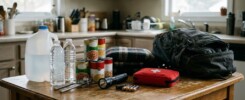
- Water: Drinking water, food-grade containers and pet water.
- Food: Shelf-stable meals, dietary essentials and a manual opener.
- Lighting: LED lanterns, headlamps, flashlights and compatible batteries.
- Communication: Charged power banks, cables, battery radio and printed contacts.
- First aid: Compare our Standard Home Kit ($19.99), Compact Kit ($12.99), or both together ($29.99). Shipping and applicable tax are additional.
- Health: Prescribed medicines and essential care supplies.
- Comfort and sanitation: Seasonal clothing, blankets, soap, toilet paper and waste bags.
- Documents and money: Identification copies, written plans and some cash.
- Optional power: A properly sized battery system or safely operated generator.
Practice before you need the plan
Use our interactive household checklist to identify supplies you own. Practice locating equipment without interrupting essential care. Add needed products to the inquiry cart. We confirm availability and your delivered total before sending an invoice. Prepare steadily and keep a safe alternative when staying home becomes unsuitable.
Before spending money, check expiration dates, test existing lights and charge batteries. Write down which devices need power and how long they must run. Ask family members where they would meet if phones stopped working. Consider transport, pets and neighbors who may need assistance. A larger collection of equipment is useful only when people understand it. Regularly and thoughtfully revisit your plan as seasons and household needs change. If authorities advise evacuation, or your home cannot maintain safe conditions, leave for an appropriate location rather than relying on supplies to solve every problem.