First aid belongs in every household outage plan, but a kit is a starting point rather than a guarantee of care. For a family of four, plan accessible supplies, knowledge, replacements and a route to professional help. This guide covers organizing supplies, not diagnosing injuries or teaching treatment.
Start with an inventory, not a piece count
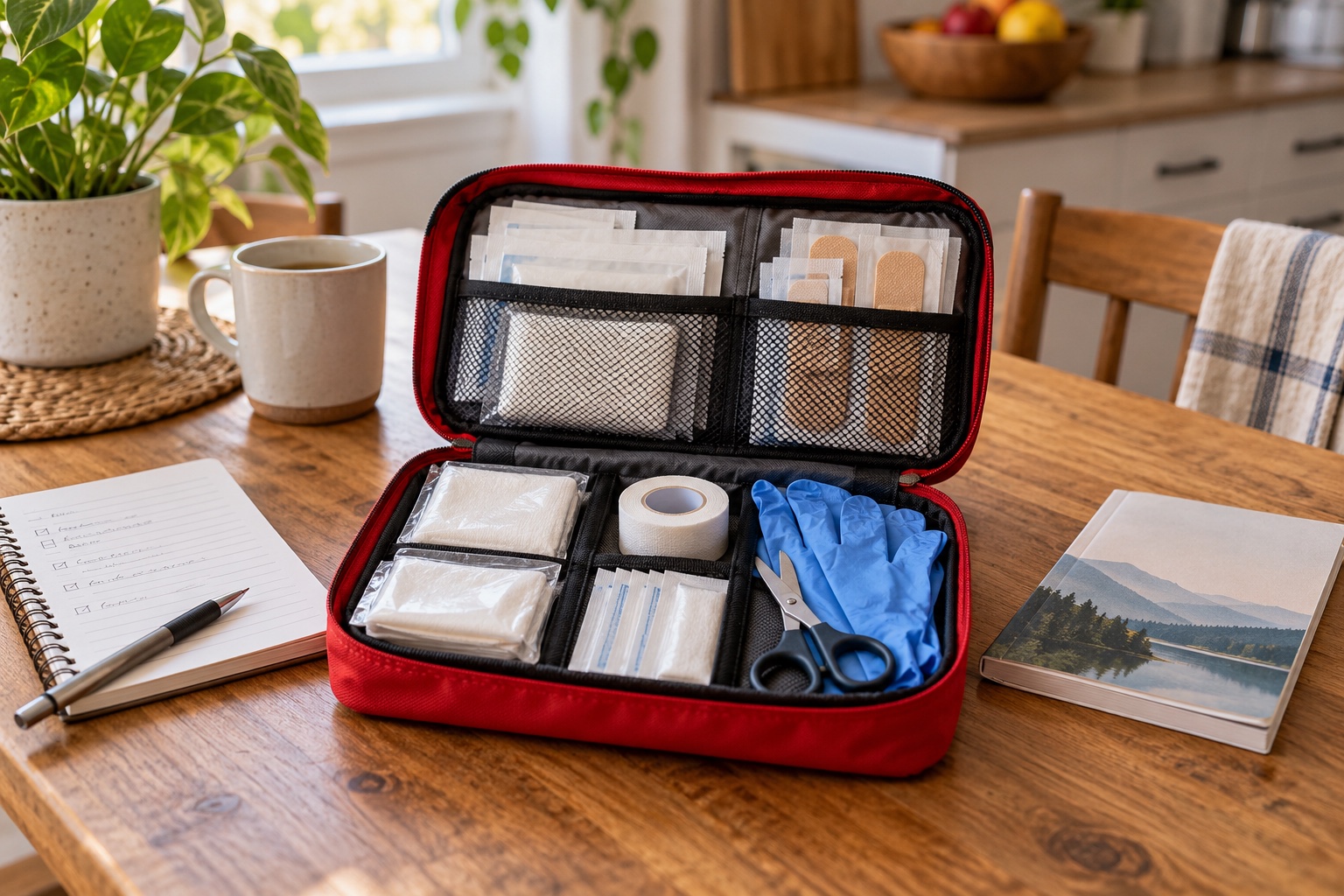
Check what you already own. Record each item, quantity, expiry date where marked and storage instructions. A kit advertised as containing many pieces may still lack something your household needs. Choose supplies for your activities, allergies, ages and ability to use them; keep medicines secure from children.
The American Red Cross family-of-four checklist is a useful reference. Examples include 25 assorted adhesive bandages, two absorbent compress dressings, two pairs of nonlatex gloves, tape, an emergency blanket and a first-aid reference. Use its full checklist to assess gaps. These are baseline kit contents, not a one-month or 90-day consumption allowance. Personal medicines and care needs require separate planning with the appropriate professional.
A practical household supply list
- A readily accessible home kit and a portable kit where your travel or activities require one.
- Usable dressings, bandages, gloves and basic tools matched to your needs and training.
- Replacement stock for frequently used items, with intact packaging and suitable storage.
- A current first-aid reference, emergency contacts and a written plan for reaching care.
- A separate list of personal care requirements to discuss with your clinician or pharmacist.
How to add or subtract a family member
Do not simply divide every item by four. Add each person’s relevant care needs, allergies and emergency contacts. Consider whether they travel independently and need access to another kit. Shared tools may serve several people; consumables depend on actual use and the situations you plan for. For a smaller household, remove individual requirements while keeping a complete, accessible shared kit.
One month through two years
Unlike drinking water, injury supplies do not have a predictable daily consumption rate. Four people could use no dressings for weeks or need several at once. The following horizons organize your review; they do not claim a fixed number of kits will last that long.
| Horizon | Planning task |
|---|---|
| One month / 30 days | Inventory the kit, replace missing items and record how to obtain refills. |
| Three months / 90 days | Check that replacements remain obtainable; review household care and travel needs. |
| Six months / 180 days | Review dates, packaging, storage conditions and changes in activities or household members. |
| One year / 365 days | Reassess kit locations, relevant training and the professional-care access plan. |
| Two years / 730 days | Maintain a rotating supply and resupply plan; do not treat one unopened kit as two years of care. |
Replace what you use and learn before an emergency
Inspect supplies regularly and after use. Replace used, expired or damaged items instead of waiting for a calendar milestone. Keep a small refill list and avoid buying more than you can store and rotate. Relevant first-aid and CPR training helps people understand their limits; equipment alone does not supply that knowledge. In a serious emergency, call 911 or your local emergency number and follow dispatcher instructions.
Compare kits, then check the contents
Our Fieldtex kit page compares the Standard Home Kit ($19.99), Compact Kit ($12.99) and Home & Travel Bundle ($29.99), plus shipping and applicable tax. Review the current contents against your needs; these basic kits are not represented as comprehensive trauma kits or a complete match to the Red Cross list. Request any missing specifications before purchasing.
Add your selection to the shared inquiry cart. We confirm availability and the delivered total before sending an invoice. Return to the 90-day supply tree to connect first aid with water, lighting, communication and essential care.