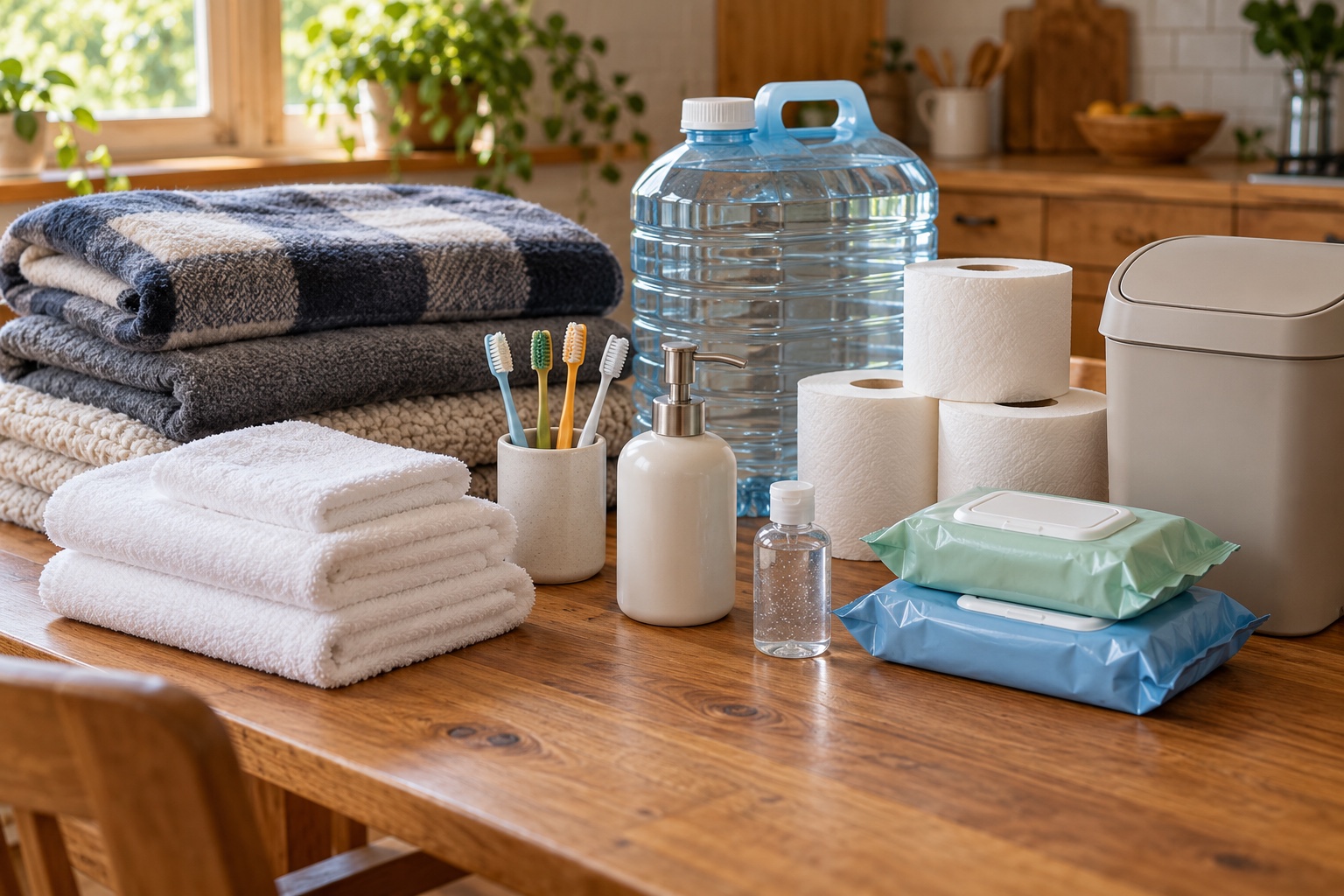
Comfort and sanitation are part of our household outage preparation plan. For a family of four, prepare for ordinary daily routines: staying appropriately dressed, sleeping, washing hands, cleaning teeth and managing waste. The right quantities depend on climate, ages, accessibility and the services that still work.
Start with supplies your family uses
Keep suitable bedding and seasonal clothing for each person, plus clean towels, soap, toothbrushes, toothpaste, toilet paper and personally needed hygiene products. Include menstrual products, diapers or other care supplies where relevant. Separate household cleaning products from food and drinking-water supplies; keep them secured and follow their labels.
As a practical starter example, four people need four suitable sleeping setups and four personal toothbrushes. Add a sleeping setup, toothbrush and personal-care needs for each additional person. Shared items such as a soap dispenser or wash basin depend on use and location rather than headcount alone. Plan laundry and drying as well as spare clothing.
Measure a week, then scale your consumables
Record seven days of normal household use. For each product, calculate: weekly household use × planning days ÷ 7, then round up to whole packages. Subtract usable stock already on hand. Add a reserve suited to uncertainty and storage space. A roll of toilet paper or bottle of soap is not a standard unit across brands; record the package size you actually use.
| Horizon | Days | Multiply measured weekly use by | Example: 4 household rolls/week |
|---|---|---|---|
| One month | 30 | 30 ÷ 7 | 18 rolls |
| Three months | 90 | 90 ÷ 7 | 52 rolls |
| Six months | 180 | 180 ÷ 7 | 103 rolls |
| One year | 365 | 365 ÷ 7 | 209 rolls |
| Two years | 730 | 730 ÷ 7 | 418 rolls |
For a different family size, measure the new household if possible. As an initial estimate only, divide the family-of-four weekly consumption by four and multiply by the new number of people. Then adjust for actual individual needs. Do not use that shortcut for diapers, medical care items or other supplies used by only certain people.
Keep handwashing workable
Plan safe water, soap, a dispensing method and somewhere to collect used wash water. CDC emergency hygiene guidance recommends washing with soap and water for at least 20 seconds. If these are unavailable, use hand sanitizer with at least 60% alcohol. Sanitizer does not remove every germ or harmful chemical and is less effective on visibly dirty or greasy hands. Follow local advisories about water use and bathing.
The water planning guide explains the basic reserve. Check your actual washing and toilet-water requirements separately; do not assume the basic daily allowance supports unlimited bathing, laundry or toilet flushing.
Confirm your toilet and waste plan
Find out whether your sewer, septic system or powered pump remains usable during an outage. Follow utility and local health-department instructions. If your normal toilet cannot be used, select a suitable temporary sanitation system and follow its instructions, including approved liners, storage and disposal. A bag alone does not establish a safe disposal method. Keep waste away from food, water, children and pets. Do not improvise disposal into storm drains, waterways or the ground.
Calculate replacement liners or other consumables from the chosen system’s actual instructions and use. For longer interruptions, arrange lawful waste removal and replenishment; storing years of bags does not solve waste handling. Never mix cleaning chemicals.
Plan comfort around the season
Match bedding and clothing to the weather and people involved. Decide where you can relocate if your home cannot maintain safe conditions or essential sanitation. A blanket is useful equipment, but does not guarantee safe shelter in every temperature. Connect this plan to your lighting and communication arrangements, then review the 90-day supply tree. Start with an achievable reserve, rotate it through ordinary use and review the plan whenever household needs change.